Real Estate CRM Software for End-to-End Property Sales Management
Quick Answer
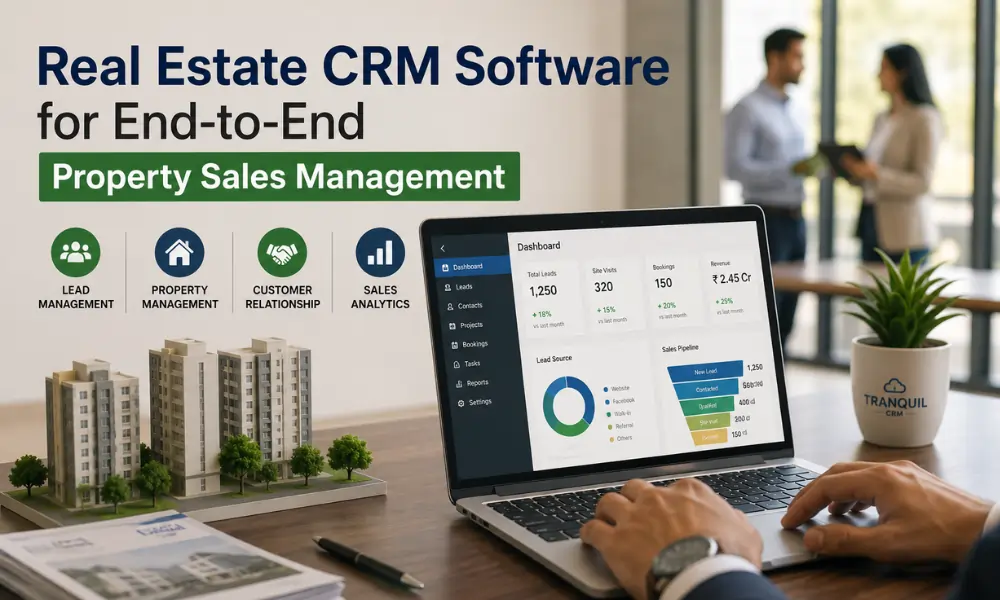
Real Estate CRM Software helps builders, developers, and real estate agencies manage the complete property sales process from lead generation to booking and customer support. By centralizing customer data, automating follow-ups, tracking site visits, managing inventory, and providing real-time sales insights, solutions like TranquilCRM help businesses improve efficiency, reduce lead leakage, and increase property sales.
Introduction
Managing property sales is much more than collecting customer enquiries. Every lead represents a potential opportunity, but converting that enquiry into a successful booking requires a well-organized sales process. From the first interaction with a customer to the final property handover, every stage plays an important role in building trust and increasing conversions.
Many real estate businesses still depend on spreadsheets, manual follow-ups, and disconnected systems to manage sales activities. As the number of enquiries grows, these methods become difficult to manage. Sales executives may miss follow-ups, duplicate customer records appear, communication gaps increase, and managers struggle to track team performance. These challenges often result in lost leads, slower sales cycles, and reduced revenue.
This is where Real Estate CRM Software becomes an essential solution.
A modern CRM is designed to manage every stage of the property sales journey from one centralized platform. It captures leads from multiple sources, assigns them to the right sales executive, automates follow-ups, tracks customer interactions, schedules site visits, manages inventory, and provides detailed sales reports. Instead of switching between multiple tools, businesses can manage the entire sales lifecycle efficiently through one system.
TranquilCRM is built specifically for builders, developers, and real estate agencies. It simplifies complex sales operations, improves collaboration between teams, and helps businesses deliver a better customer experience. With automation and real-time analytics, TranquilCRM enables organizations to make faster decisions, improve productivity, and close more property deals.
In this article, we'll explore how Real Estate CRM Software helps manage the complete property sales process, why end-to-end sales management is important, and how businesses can improve their sales performance using a dedicated CRM solution.
What Is End-to-End Property Sales Management?
End-to-end property sales management refers to managing every stage of the customer's buying journey in a structured and organized manner. Instead of focusing only on lead generation or follow-ups, it covers the complete process from the first enquiry until after-sales service.
Every buyer moves through different stages before making a purchase decision.
A typical property sales journey includes:
- Lead generation
- Lead qualification
- Customer communication
- Follow-Up
- Site visit scheduling
- Property presentation
- Negotiation
- Booking confirmation
- Payment tracking
- Documentation
- Customer support
- Referral management
Every stage influences the customer's decision. If there are delays, poor communication, or missing information at any point, the chances of losing the customer increase.
Best Real Estate CRM Software ensures every stage is connected, making the entire process more efficient and transparent.
Why Manual Property Sales Management Creates Problems
Many builders and developers still use Excel sheets, notebooks, emails, and messaging apps to manage customer enquiries. While these methods may work for a small number of leads, they become difficult to manage as the business grows.
Some of the most common challenges include:
Lost Leads
Customer enquiries are often stored in different places, making it easy to forget important follow-ups or lose valuable information.
Slow Response Times
Modern buyers expect quick responses. Delayed communication often leads customers to choose another builder or real estate agency.
Duplicate Data
Without a centralized system, multiple sales executives may contact the same customer, creating confusion and reducing professionalism.
Limited Visibility
Managers cannot easily monitor the progress of leads, team activities, or booking performance in real time.
Poor Customer Experience
Customers expect consistent communication throughout their buying journey. Manual processes make it difficult to provide personalized and timely support.
These challenges reduce productivity, increase operational costs, and negatively impact sales performance.
How Real Estate CRM Software Simplifies Every Stage of Property Sales
1. Lead Capture from Multiple Sources
Real estate businesses receive enquiries from several marketing channels every day. Managing these leads manually can result in delays and missed opportunities.
Real Estate CRM Software automatically captures enquiries from:
- Company websites
- Landing pages
- Google Ads
- Facebook and Instagram campaigns
- Property portals
- Phone calls
- Referral campaigns
Instead of entering customer information manually, all enquiries are stored in one centralized database.
This saves time, improves accuracy, and ensures every lead is recorded immediately.
2. Smart Lead Assignment
Assigning enquiries to the right sales executive is one of the most important steps in the sales process.
Real Estate CRM Software automatically distributes leads based on:
- Project location
- Sales executive availability
- Property type
- Customer preferences
- Team workload
3. Lead Qualification
Not every enquiry is ready to purchase immediately.
Some customers are actively looking for a property, while others are only gathering information.
Real Estate CRM Software helps sales teams qualify leads by recording details such as:
- Budget
- Preferred location
- Property type
- Purchase timeline
- Financing requirements
- Family size
- Investment purpose
Based on this information, sales teams can prioritize high-intent buyers while continuing to nurture long-term prospects.
Lead qualification helps improve productivity and increases conversion rates because teams spend more time engaging with customers who are most likely to make a purchase.
4. Automated Follow-Up Management
One of the biggest reasons businesses lose sales opportunities is inconsistent follow-up.
Property buyers rarely make a purchase after the first interaction. They usually require multiple conversations, project updates, pricing discussions, and site visits before making a decision.
Real Estate CRM Software automates follow-up activities by:
- Scheduling reminders
- Sending WhatsApp messages
- Delivering email campaigns
- Notifying sales executives
- Tracking pending follow-ups
This ensures every customer receives timely communication without relying entirely on manual effort.
Consistent follow-ups improve customer trust and significantly increase booking opportunities.
5. Site Visit Management Made Simple
A site visit is one of the most important stages in the property buying journey. Most buyers prefer to visit the property before making a final decision. However, managing multiple site visits manually can be challenging, especially when your sales team is handling dozens of enquiries every day.
Real Estate CRM Software simplifies site visit management by organizing every appointment in one place. Sales executives can schedule visits, assign relationship managers, send confirmation messages, and receive reminders before the meeting.
The CRM also records important details such as:
- Site visit date and time
- Assigned sales executive
- Customer feedback
- Next follow-up date
- Visit outcome
This information helps sales teams understand customer interest and plan the next step more effectively. A structured site visit process improves the customer experience and increases the chances of converting enquiries into bookings.
6. Property Inventory Management
Managing inventory across multiple projects can become difficult without a centralized system. Sales teams need real-time information about available units, sold properties, blocked inventory, and pricing.
With Real Estate CRM Software, inventory updates are available instantly, allowing sales executives to provide accurate information to customers.
Benefits include:
- Real-time unit availability
- Project-wise inventory tracking
- Floor-wise and tower-wise availability
- Price updates
- Inventory reservation tracking
- Reduced double bookings
Having accurate inventory data helps businesses avoid confusion, respond quickly to customer enquiries, and improve overall sales efficiency.
7. Booking and Payment Tracking
After a customer decides to purchase a property, the sales process continues with booking confirmation, payment collection, and documentation.
Real Estate CRM Software helps businesses manage this stage efficiently by tracking:
- Booking amount
- Payment schedules
- Pending installments
- Due dates
- Payment status
- Booking confirmations
Managers can view payment progress in real time, reducing manual tracking and improving financial transparency.
Customers also receive timely reminders about payment milestones, creating a smoother buying experience.
8. Centralized Document Management
Property sales involve multiple documents, including:
- KYC documents
- Booking forms
- Agreements
- Payment receipts
- Loan documents
- Customer identity proofs
Managing these documents manually increases the risk of errors and delays.
Real Estate CRM Software securely stores all customer documents in one centralized location. Sales teams can access files whenever required without searching through emails or paper records.
Centralized document management improves efficiency, reduces paperwork, and ensures important information is always available when needed.
9. Visual Sales Pipeline Tracking
Understanding where each customer is in the sales journey is essential for improving conversions.
A visual sales pipeline allows managers to monitor every stage of the process, including:
- New Enquiry
- Contacted
- Qualified Lead
- Follow-Up
- Site Visit Scheduled
- Site Visit Completed
- Negotiation
- Booking Confirmed
- Closed
This visual approach makes it easy to identify bottlenecks. For example, if many customers are completing site visits but few are moving to the booking stage, management can review pricing, sales presentations, or follow-up strategies to improve results.
10. Real-Time Sales Performance Dashboard
One of the biggest advantages of Real Estate CRM Software is access to live business insights.
Instead of waiting for weekly reports, managers can monitor sales performance in real time.
- Total enquiries
- Active leads
- Qualified prospects
- Site visits completed
- Property bookings
- Revenue generated
- Pending follow-ups
- Lead source performance
- Team productivity
These insights help businesses make faster decisions and improve operational efficiency.
11. Team Performance Monitoring
A successful real estate business depends on the productivity of its sales team.
Real Estate CRM Software enables managers to monitor important performance metrics, including:
- Calls completed
- Follow-ups conducted
- Meetings scheduled
- Site visits managed
- Bookings closed
- Response time
- Customer engagement
- Conversion rates
By analyzing these metrics, managers can identify top performers, provide coaching where needed, and improve overall team performance.
12. Better Customer Communication
Customers expect timely and personalized communication throughout their buying journey.
Real Estate CRM Software helps businesses maintain consistent communication through:
- WhatsApp integration
- Email campaigns
- SMS notifications
- Automated reminders
- Personalized follow-ups
Every interaction is recorded within the CRM, allowing sales executives to continue conversations without asking customers to repeat information.
This creates a professional customer experience and builds long-term trust.
Why Choose TranquilCRM?
Choosing a CRM designed specifically for the real estate industry makes a significant difference.
TranquilCRM is built to support builders, developers, brokers, and real estate agencies by simplifying every stage of the property sales process.
Key features include:
- Automatic lead capture
- Smart lead assignment
- WhatsApp integration
- Automated follow-ups
- Site visit scheduling
- Inventory management
- Sales pipeline tracking
- Payment tracking
- Customer communication histor
- Real-time dashboards
- Team performance reports
With TranquilCRM, businesses can manage their complete sales journey from one centralized platform, improving efficiency, customer satisfaction, and booking conversions.
Best Practices for End-to-End Property Sales Management
To get the best results from Real Estate CRM Software:
- Respond to every enquiry as quickly as possible.
- Keep customer information updated after every interaction.
- Automate follow-ups to avoid missed opportunities.
- Monitor sales dashboards regularly.
- Review team performance reports weekly.
- Train your sales team to use CRM features effectively.
- Analyze lead sources to improve marketing ROI.
- Use customer feedback to refine your sales process.
Following these best practices helps businesses build a stronger sales pipeline and improve long-term growth.
Frequently Asked Questions
1. What is Real Estate CRM Software?
Real Estate CRM Software is a specialized solution designed for builders, developers, brokers, and real estate agencies to manage the complete property sales process. It helps businesses capture leads, automate follow-ups, schedule site visits, track bookings, manage customer communication, and monitor sales performance from a single platform. This improves efficiency, reduces manual work, and increases conversion rates.
2. How does Real Estate CRM Software support end-to-end property sales management?
Real Estate CRM Software manages every stage of the customer journey, starting from lead generation and qualification to follow-ups, site visits, booking, payment tracking, and after-sales support. By centralizing all customer information and automating repetitive tasks, it ensures that no lead is missed and every sales opportunity is managed efficiently.
3. Why should builders and developers invest in Real Estate CRM Software?
Builders and developers often manage multiple projects, large sales teams, and thousands of enquiries. Without a centralized system, it becomes difficult to track customer interactions and sales progress. Real Estate CRM Software improves team collaboration, provides real-time visibility into the sales pipeline, reduces lead leakage, and helps businesses convert more enquiries into successful property bookings.
4. Can Real Estate CRM Software improve customer experience?
Yes. A CRM allows sales teams to provide faster responses, personalized communication, timely follow-ups, and accurate property information. Customers receive consistent updates throughout their buying journey, creating a professional and seamless experience that builds trust and encourages long-term relationships.
5. What features should businesses look for in Real Estate CRM Software?
When selecting a CRM, businesses should look for features such as automatic lead capture, smart lead assignment, WhatsApp integration, follow-up automation, site visit management, inventory tracking, booking management, payment tracking, sales dashboards, reporting, and mobile accessibility. These features help streamline operations and improve overall sales performance.
6. Why is TranquilCRM a good choice for real estate businesses?
TranquilCRM is built specifically for the real estate industry, making it easier for builders, developers, and agencies to manage the complete sales lifecycle. From capturing enquiries and automating follow-ups to tracking inventory and monitoring team performance, TranquilCRM provides all the tools needed to improve productivity, enhance customer relationships, and increase property bookings.
Conclusion
Managing property sales successfully requires much more than generating enquiries. Every interaction with a potential buyer—from the first enquiry to the final booking and beyond—plays a crucial role in building trust and increasing conversions. Businesses that rely on spreadsheets, manual follow-ups, and disconnected systems often struggle with missed opportunities, delayed communication, and inconsistent customer experiences.
Real Estate CRM Software transforms the way real estate businesses manage their operations by bringing every stage of the sales journey into one centralized platform. It simplifies lead management, automates follow-ups, schedules site visits, tracks inventory and bookings, manages customer communication, and provides real-time insights into sales performance. This not only improves operational efficiency but also helps businesses respond faster, make better decisions, and close more deals.
For builders, developers, brokers, and real estate agencies looking to streamline their sales process, TranquilCRM offers a complete solution tailored to the industry's unique requirements. Its automation capabilities, intelligent reporting, and user-friendly interface enable teams to work more efficiently while delivering a better experience for customers.
As the real estate market continues to evolve, businesses that embrace digital tools will be better positioned to meet customer expectations and stay ahead of the competition. Investing in the right Real Estate CRM Software is not just about managing leads—it is about creating a scalable sales process that drives higher conversions, stronger customer relationships, and long-term business growth.