How to Improve Site Visit-to-Booking Conversion: 8 Tactics That Work
Introduction
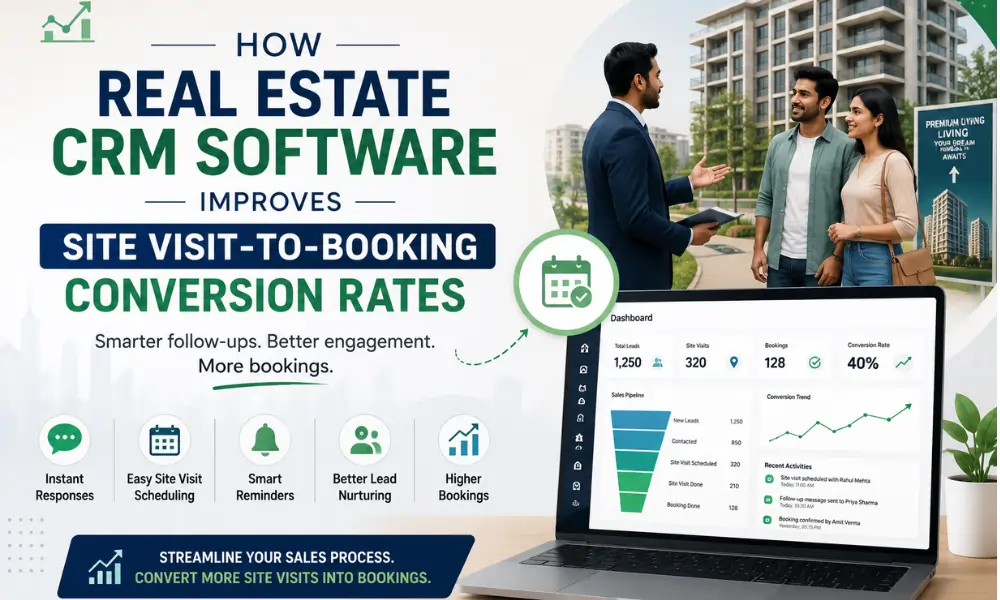
Generating property inquiries is only the first step in the sales journey. The real challenge begins after a potential buyer expresses interest and schedules a site visit. Many real estate businesses invest heavily in Google Ads, Facebook campaigns, property portals, and referral marketing to attract leads. However, a large percentage of these leads never become customers because the sales process lacks consistency and proper follow-up.
This is where real estate CRM software plays a vital role.
Instead of relying on spreadsheets or manual reminders, a CRM creates a structured process that manages every stage of the customer journey—from the first inquiry to the final booking. It ensures every lead receives timely communication, every site visit is tracked, and every opportunity is followed through until a decision is made.
In this guide, you'll learn why site visits fail to convert and 8 practical tactics to turn more of them into bookings.
Understanding the Site Visit-to-Booking Conversion Rate
The site visit-to-booking conversion rate measures how many people who visit a property eventually complete a booking.
For example:
- 100 customers schedule a site visit.
- 25 customers book a property.
- Your site visit-to-booking conversion rate is 25%.
This metric is one of the most important indicators of your sales performance. Increasing this conversion rate allows you to generate more bookings without spending additional money on lead generation.
For many builders, even improving the conversion rate by 5% to 10% can significantly increase monthly revenue.
Why Many Site Visits Don't Turn Into Bookings
Most real estate businesses lose bookings not because their projects are poor, but because the sales process has gaps.
Common reasons include:
- Delayed responses after the site visit
- No structured follow-up process
- Poor communication between sales representatives
- Lack of customer activity tracking
- No reminders for pending follow-ups
- Generic communication instead of personalized conversations
- Sales teams forgetting customer preferences
- No visibility into the customer's buying stage
When these issues occur repeatedly, marketing costs increase while booking rates decline.
Fortunately, a CRM is designed to eliminate these challenges.
8 Tactics to Improve Site Visit-to-Booking Conversion
1. Instant Lead Response Creates a Strong First Impression
The first few minutes after receiving a property inquiry are crucial.
Leads contacted quickly are far more likely to stay engaged than those who wait hours or days for a response.
With a CRM, every inquiry can automatically receive:
- A personalized welcome message
- Project brochures
- Floor plans
- Pricing details
- Sales representative information
- Appointment scheduling links
This immediate engagement increases customer confidence and encourages them to proceed to the next stage booking a site visit.
Automated replies also mean every lead is acknowledged immediately, even outside business hours.
2. Automated Site Visit Scheduling Eliminates Delays
Coordinating site visits manually often leads to scheduling conflicts, forgotten appointments, or delayed confirmations.
A CRM simplifies this process by allowing sales teams to:
- Schedule visits instantly
- Assign representatives automatically
- Send confirmation messages
- Share Google Maps locations
- Notify customers of any changes
Customers appreciate convenience. A seamless scheduling process increases attendance and creates a professional experience that positively influences buying decisions.
3. Automated Reminders Reduce No-Shows
Many scheduled site visits are missed simply because buyers forget the appointment or become busy.
CRM automation solves this problem by sending reminders through:
- SMS
Customers receive timely notifications before their scheduled visit, reducing no-show rates and helping sales teams make better use of their time.
This simple feature alone can significantly improve the number of completed site visits, creating more opportunities for bookings.
4. Complete Customer History Helps Sales Teams Personalize Conversations
Successful property sales are built on understanding customer needs.
A CRM stores valuable information, including:
- Budget range
- Preferred property type
- Family requirements
- Previous conversations
- Site visit feedback
- Project interests
Instead of asking the same questions repeatedly, sales representatives can continue conversations naturally and provide personalized recommendations.
Personalization builds trust, strengthens relationships, and increases the likelihood of converting a site visit into a confirmed booking.
5. Follow Up Within 24 Hours of Every Visit
The day after a site visit is when buyer interest is highest. Set a rule that every completed visit gets a feedback call within 24 hours, followed by a WhatsApp message summarising the units discussed, the price and the payment plan.
- Call to collect feedback and answer open questions
- Send the exact unit details, floor plan and cost sheet discussed
- Agree a clear next step: second visit, family visit or booking discussion
6. Record and Handle Objections
Most buyers leave a site visit with one or two concerns: price, possession date, loan eligibility, location or a specific unit. Log these objections against the lead so the next conversation addresses them directly instead of repeating the sales pitch.
Reviewing the most common objections across all visits each month also tells you whether the issue is the sales conversation, the pricing or the product itself.
7. Plan for the Family Visit
Property is rarely a one-person decision. Many bookings happen only after a second visit with a spouse, parents or a financial adviser. Ask early who else is involved in the decision, invite them proactively, and treat the second visit as a key pipeline stage rather than a repeat of the first.
8. Track Your Conversion Rate by Project and Executive
You can't improve what you don't measure. Track site visit-to-booking conversion separately for each project, each sales executive and each lead source. A low rate on one project points to pricing or product fit; a low rate for one executive points to coaching; a low rate from one source points to lead quality.
Our guide to real estate sales metrics shows how to calculate this and the other funnel metrics worth tracking.
Where Tranquil CRM Fits
Tranquil CRM handles site visit scheduling, WhatsApp reminders, visit feedback and post-visit follow-up tasks in one place. Builders can see how it works on our CRM for builders page.
Frequently Asked Questions (FAQs)
1. How does a CRM improve site visit-to-booking conversion rates?
A CRM improves conversions by automating site visit scheduling, sending reminders, tracking every customer interaction, and ensuring timely follow-ups. Sales teams receive complete customer information before each interaction, allowing them to personalize conversations and address buyer concerns more effectively.
2. Why are follow-ups important after a site visit?
Most property buyers do not make a purchase decision immediately after visiting a project. They compare properties, discuss options with family, and evaluate pricing before booking. Consistent and personalized follow-ups help keep your project top of mind, answer questions, and build trust, increasing the likelihood of converting a site visit into a confirmed booking.
3. Can a CRM integrate with WhatsApp?
Yes. Most modern real estate CRMs integrate with WhatsApp Business, enabling instant responses, automated follow-up messages, appointment reminders, and property updates. Since WhatsApp is widely used by buyers, this integration improves communication and customer engagement throughout the sales journey.
Conclusion
Improving your site visit-to-booking conversion rate is one of the most effective ways to increase sales without spending more on lead generation. Every successful booking begins with a well-managed customer journey, from the first inquiry to the final decision. When follow-ups are delayed, customer information is scattered, or communication is inconsistent, valuable opportunities are lost.
A CRM solves these challenges by creating a structured, automated sales process. It captures leads from multiple sources, schedules site visits, sends timely reminders, tracks every customer interaction, and provides your sales team with the insights they need to engage prospects effectively. This results in better customer experiences, improved team productivity, and higher booking conversion rates.