How to Reduce Cost Per Lead in Real Estate Without Raising Ad Spend
Introduction
Generating leads is essential for any real estate business, but generating leads alone isn't enough. The real challenge lies in converting those leads into customers without increasing marketing expenses. Many real estate agents, builders, and developers invest heavily in Google Ads, Facebook campaigns, property portals, and other lead generation channels. However, poor lead management often results in wasted marketing budgets and higher acquisition costs.
This is where real estate CRM software becomes essential.
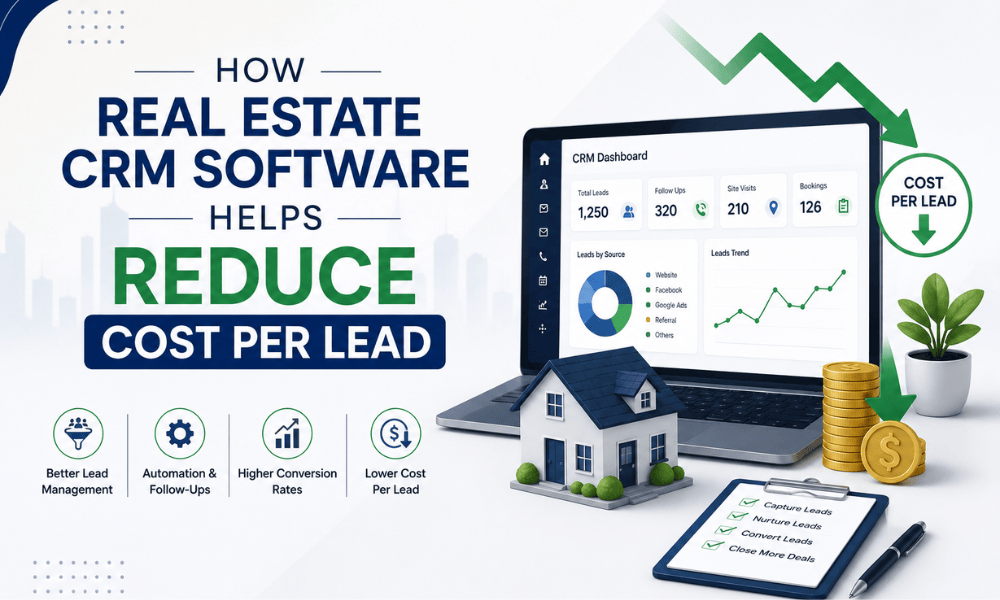
By automating lead management, improving follow-ups, and optimizing sales processes, a CRM helps businesses maximize conversions while reducing the cost per lead.
In this guide, we'll explore how a CRM helps reduce cost per lead and improves overall sales performance.
What Is Cost Per Lead in Real Estate?
Cost per lead (CPL) refers to the amount spent to acquire a potential customer.
For example:
- Google Ads budget: $1,000
- Leads generated: 100
- Cost per lead: $10
While generating leads is important, reducing the cost per qualified lead is even more critical. High CPL can affect profitability and limit growth.
Common reasons for high CPL include:
- Slow follow-ups
- Poor lead nurturing
- Duplicate leads
- Manual processes
- Low conversion rates
- Inefficient marketing campaigns
A CRM helps solve these challenges.
8 Ways to Reduce Cost Per Lead
1. Eliminates Lead Leakage
One of the biggest reasons businesses lose money is lead leakage.
Leads may come from:
- Websites
- Facebook Ads
- Google Ads
- Property portals
- WhatsApp inquiries
Without a proper system, many inquiries go unanswered or are forgotten.
A CRM automatically captures and organizes leads, ensuring every opportunity receives attention. This increases conversions and lowers acquisition costs.
2. Improves Response Time
Studies show that responding quickly improves conversion rates significantly.
A CRM enables businesses to:
- Send instant WhatsApp replies
- Trigger automated emails
- Assign leads immediately
- Notify sales representatives instantly
Faster responses mean fewer lost leads and better marketing ROI.
3. Automates Follow-Ups
Most property sales require multiple follow-ups.
Manual follow-up processes often lead to missed opportunities.
With a CRM, businesses can automate:
- Reminder notifications
- Email sequences
- WhatsApp follow-ups
- Appointment confirmations
- Site visit reminders
Consistent communication increases conversion rates and reduces the overall cost per lead.
4. Identifies High-Quality Lead Sources
Not all marketing channels deliver the same results.
CRM analytics help businesses identify:
- Which campaigns generate the most conversions
- Which channels produce low-quality leads
- Where marketing budgets should be allocated
This data-driven approach reduces unnecessary spending and improves lead quality.
5. Prevents Duplicate Leads
Duplicate leads waste time and marketing resources.
A CRM automatically detects and merges duplicate records, allowing teams to focus on genuine prospects.
This improves efficiency and reduces acquisition costs.
6. Enhances Team Productivity
Sales teams often spend hours on repetitive administrative tasks.
CRM automation handles:
- Data entry
- Lead assignment
- Follow-up scheduling
- Pipeline updates
As a result, teams spend more time closing deals rather than managing spreadsheets.
7. Improves Lead Conversion Rates
Lower cost per lead isn't only about spending less—it's about converting more.
A CRM improves conversions through:
- Personalized communication
- Faster responses
- Automated nurturing
- Sales pipeline tracking
Higher conversions mean lower acquisition costs and greater profitability.
8. Supports Better Marketing Decisions
Advanced reporting allows businesses to monitor:
- Cost per lead
- Conversion rates
- Campaign performance
- Marketing ROI
This helps companies optimize advertising budgets and focus on profitable channels.
Where Tranquil CRM Fits
Tranquil CRM tracks every lead from source to booking, so you can see cost per lead and cost per booking by campaign and project. Builders can see how this works on our CRM for builders page.
Best Practices for Lowering Cost Per Lead
Respond to Leads Within Minutes
Quick responses increase engagement and improve conversion rates.
Automate Repetitive Tasks
Automation reduces manual effort and improves productivity.
Track Marketing Performance
Analyze lead sources regularly and optimize campaigns accordingly.
Nurture Every Lead
Not every prospect buys immediately. Consistent follow-ups increase conversion opportunities.
Use Data to Improve Sales Processes
Reporting and analytics help identify weaknesses and improve performance.
Frequently Asked Questions
What is cost per lead in real estate?
Cost per lead refers to the amount spent to acquire a potential customer through marketing activities. Lowering cost per lead helps businesses improve profitability and maximize marketing ROI.
How does a CRM reduce cost per lead?
CRM software improves lead management, automates follow-ups, and increases conversion rates. These features help businesses generate more sales from existing marketing budgets.
Can CRM software improve marketing ROI?
Yes. CRM software tracks lead sources, campaign performance, and conversion rates, enabling businesses to allocate resources more effectively and maximize returns.
Why is lead automation important?
Automation ensures timely communication and reduces the risk of missed opportunities. This leads to better customer experiences and higher conversion rates.
Conclusion
Reducing cost per lead is essential for sustainable growth in the real estate industry. Businesses that rely solely on generating more leads often overlook the importance of optimizing conversions and improving efficiency.
A CRM provides the tools needed to capture leads, automate communication, track performance, and maximize marketing ROI.
With the right CRM, real estate businesses can reduce lead acquisition costs, improve sales productivity, and achieve long-term success in an increasingly competitive market.