How Real Estate CRM Software Helps Increase Property Sales Efficiency
Quick Answer
Real Estate CRM Software helps builders, developers, and real estate agencies improve property sales efficiency by automating lead management, streamlining follow-ups, tracking customer interactions, managing site visits, and providing real-time sales insights. With a platform like TranquilCRM, businesses can reduce manual work, shorten the sales cycle, and convert more enquiries into successful property bookings.
Introduction
The real estate industry has become more competitive than ever. Buyers today expect quick responses, personalized communication, and a seamless purchasing experience. At the same time, builders and developers are handling thousands of enquiries from multiple marketing channels while managing several projects simultaneously. Without the right technology, maintaining efficiency throughout the sales process becomes increasingly difficult.
Many real estate businesses still rely on spreadsheets, manual follow-ups, and disconnected communication tools. These outdated methods often result in missed enquiries, delayed responses, duplicate customer records, and poor coordination between sales teams. As a result, businesses lose valuable opportunities, experience lower conversion rates, and spend more money acquiring new leads.
This is where Real Estate CRM Software plays a crucial role.
A modern CRM centralizes every stage of the property sales journey—from capturing leads and qualifying prospects to scheduling site visits, managing bookings, and tracking customer relationships. Instead of switching between different systems, sales teams can access all customer information from one platform, enabling faster responses and more personalized communication.
Solutions like TranquilCRM are built specifically for the real estate industry. They help builders, developers, and real estate agencies automate repetitive tasks, improve collaboration, and make data-driven decisions that increase sales efficiency. By reducing administrative work and providing complete visibility into the sales pipeline, businesses can focus more on building customer relationships and closing deals.
In this article, we'll explore how Real Estate CRM Software improves property sales efficiency, why it has become an essential tool for modern real estate businesses, and how it helps organizations achieve sustainable growth.
What Is Property Sales Efficiency?
Property sales efficiency refers to the ability of a real estate business to convert enquiries into successful bookings using the least amount of time, effort, and resources.
A highly efficient sales process allows businesses to:
- Respond to enquiries faster
- Qualify leads accurately
- Schedule timely follow-ups
- Manage site visits effectively
- Close deals quickly
- Improve customer satisfaction
- Increase revenue without increasing operational costs
Sales efficiency is not just about selling more properties—it is about optimizing every stage of the customer journey.
Why Sales Efficiency Matters in Real Estate
Every enquiry represents a potential buyer. However, without proper follow-up and organized sales management, many of these opportunities are lost.
Some common challenges include:
- Slow lead response times
- Missed follow-ups
- Poor communication between departments
- Lack of visibility into the sales pipeline
- Duplicate customer records
- Manual reporting
- Difficulty tracking team performance
Improving sales efficiency enables businesses to reduce these challenges while creating a better buying experience for customers.
How Real Estate CRM Software Improves Property Sales Efficiency
1. Centralized Lead Management
One of the biggest reasons real estate businesses lose customers is poor lead organization.
Every day, enquiries come from different sources such as:
- Company websites
- Google Ads
- Facebook Ads
- Instagram campaigns
- Property portals
- Walk-in enquiries
- Referral programs
Managing all these leads manually often results in delays and missed opportunities.
Real Estate CRM Software automatically captures and organizes enquiries into one centralized database.
This allows sales teams to:
- View all leads in one place
- Eliminate duplicate records
- Assign leads quickly
- Track customer status
- Monitor communication history
Centralized lead management improves response time and ensures that no potential customer is overlooked.
2. Faster Lead Assignment
Speed plays an important role in property sales.
Research consistently shows that businesses responding to enquiries quickly have a much higher chance of converting prospects into customers.
Real Estate CRM Software automatically distributes leads based on:
Project Location
Customers are assigned to sales representatives responsible for the relevant project.
Sales Executive Availability
The system balances workloads by assigning leads to available team members.
Property Type
Luxury apartments, villas, commercial spaces, and plotted developments can each be routed to specialists.
Customer Preferences
Qualified buyers are connected with sales executives who best match their requirements.
Automatic lead assignment reduces delays and helps businesses engage with customers while interest is at its highest.
3. Better Lead Qualification
Not every enquiry is ready to purchase immediately.
Some prospects are actively searching, while others are still exploring options.
Real Estate CRM Software helps sales teams qualify leads using important information such as:
- Budget
- Preferred location
- Property type
- Purchase timeline
- Loan requirements
- Investment purpose
- Family size
Why Lead Qualification Matters
Qualified leads receive priority attention, enabling sales teams to focus on buyers with the highest potential to convert.
This improves productivity while reducing time spent on low-quality enquiries.
4. Automated Follow-Up Management
Consistent follow-up is one of the biggest factors influencing property sales.
Many buyers require multiple interactions before making a purchase decision.
Instead of relying on manual reminders, Real Estate CRM Software automates follow-ups through:
- WhatsApp messages
- Email campaigns
- SMS reminders
- Call reminders
- Task notifications
Benefits of Automated Follow-Ups
- No missed opportunities
- Faster customer engagement
- Improved response consistency
- Higher conversion rates
- Better customer experience
Automation also allows sales representatives to spend more time consulting buyers rather than managing administrative tasks.
5. Smart Customer Communication
Customers expect businesses to understand their preferences and provide personalized recommendations.
Real Estate CRM Software stores:
- Customer conversations
- Previous enquiries
- Site visit history
- Preferred property types
- Budget details
- Communication records
With this information, sales executives can deliver more relevant property suggestions and build stronger relationships with potential buyers.
Personalized communication increases trust and significantly improves the likelihood of closing deals.
6. Streamline Site Visit Management
A site visit is one of the most critical stages in the property buying journey. While digital marketing generates enquiries, site visits often determine whether a prospect becomes a customer. Poor scheduling, delayed confirmations, or lack of follow-up can reduce booking opportunities.
Real Estate CRM Software helps builders and developers organize site visits efficiently by keeping every appointment in one centralized system.
With a solution like TranquilCRM, sales teams can:
- Schedule site visits instantly
- Assign relationship managers automatically
- Send WhatsApp and SMS reminders
- Share project location details
- Record customer feedback after the visit
- Schedule the next follow-up automatically
- Higher customer attendance
- Better sales coordination
- Improved customer experience
- Faster follow-ups after visits
- Increased booking conversions
Every site visit becomes measurable, helping businesses understand which projects attract the most buyer interest.
7. Sales Pipeline Management
Understanding where every customer is in the buying journey is essential for improving sales efficiency.
Without a structured process, sales teams often lose track of customer progress.
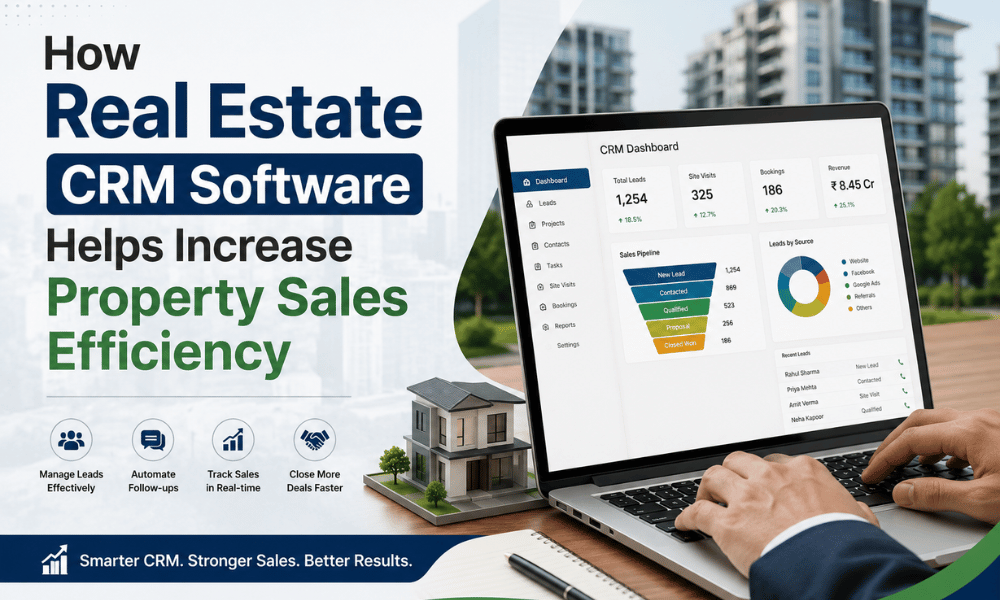
Real Estate CRM Software provides a visual sales pipeline where every enquiry moves through predefined stages.
Common Sales Pipeline Stages
- New Lead
- Contacted
- Qualified
- Follow-up
- Site Visit Scheduled
- Site Visit Completed
- Negotiation
- Booking
- Closed
Managers can instantly identify:
- Pending follow-ups
- Delayed enquiries
- High-value prospects
- Sales bottlenecks
- Conversion opportunities
A visual pipeline helps businesses optimize every stage of the property sales process.
8. Real-Time Inventory Management
Inventory management becomes challenging when multiple projects are running simultaneously.
Customers expect sales executives to provide accurate information about available units, pricing, offers, and configurations.
Real Estate CRM Software provides live inventory updates, allowing teams to instantly check:
Inventory Details
- Available units
- Reserved inventory
- Sold properties
- Tower-wise availability
- Floor-wise availability
- Unit sizes
- Pricing
- Special offers
This reduces errors and prevents double bookings while improving customer confidence.
9. Booking and Payment Tracking
The sales process does not end when a customer decides to purchase a property.
Builders must also manage bookings, payment schedules, documentation, and customer communication.
Real Estate CRM Software helps businesses track:
- Booking amount
- Payment milestones
- Installments
- Pending balances
- Booking confirmation
- Payment history
Why Payment Tracking Matters
Proper payment management reduces manual errors, improves financial transparency, and ensures customers receive timely payment reminders.
10. Sales Performance Analytics
Data-driven businesses consistently outperform those relying on assumptions.
Real Estate CRM Software provides detailed reports that help management evaluate overall business performance.
Lead Reports
- Total enquiries
- Qualified leads
- Lost leads
- Lead source analysis
Sales Reports
- Property bookings
- Revenue generated
- Conversion rates
Marketing Reports
- Campaign performance
- Cost per lead
- Return on investment
- Best-performing marketing channels
Team Reports
- Calls completed
- Follow-ups completed
- Site visits handled
- Bookings closed
- Individual conversion rates
These reports help management make faster and more informed decisions.
11. Improve Team Productivity
A productive sales team closes more deals and delivers better customer experiences.
Real Estate CRM Software eliminates repetitive administrative work through automation.
Sales representatives spend less time:
- Updating spreadsheets
- Searching for customer information
- Preparing manual reports
- Setting reminders
Instead, they spend more time:
- Speaking with customers
- Conducting site visits
- Building relationships
- Closing property sales
This significantly increases overall sales efficiency.
12. Better Customer Relationship Management
Customer relationships play a major role in successful property sales.
Buyers expect personalized communication throughout their buying journey.
Real Estate CRM Software records:
- Phone calls
- Emails
- WhatsApp conversations
- Site visit history
- Customer preferences
- Previous enquiries
With complete customer information available, sales teams can deliver personalized experiences that build trust and improve customer satisfaction.
Happy customers are also more likely to recommend your business to friends and family, generating valuable referral leads.
Why Choose TranquilCRM?
Selecting the right CRM is an important decision for any real estate business.
TranquilCRM is developed specifically for builders, developers, brokers, and real estate agencies to simplify property sales management.
Its features include:
- Lead capture from multiple channels
- Smart lead assignment
- Automated follow-ups
- WhatsApp integration
- Site visit management
- Inventory tracking
- Booking management
- Sales pipeline tracking
- Payment monitoring
- Team performance dashboards
- Real-time business reports
By centralizing operations and automating repetitive tasks, TranquilCRM helps businesses improve sales efficiency while delivering a better customer experience.
Best Practices for Improving Property Sales Efficiency
To maximize the benefits of Real Estate CRM Software:
Respond Quickly
Contact every new lead within the shortest possible time to improve conversion opportunities.
Keep Customer Information Updated
Record every interaction so the entire team has access to the latest customer information.
Automate Repetitive Tasks
Use automated reminders, follow-ups, and notifications to ensure consistent communication.
Monitor Reports Regularly
Analyze dashboards to identify sales trends, marketing performance, and areas requiring improvement.
Train Your Team
Ensure every sales executive understands how to use the CRM effectively and follows a standardized sales process.
Frequently Asked Questions
1. What is Real Estate CRM Software?
Real Estate CRM Software is a specialized platform designed to help builders, developers, and real estate agencies manage leads, customer relationships, follow-ups, site visits, bookings, and sales performance from one centralized system. It improves productivity, reduces manual work, and increases property sales efficiency.
2. How does Real Estate CRM Software improve property sales efficiency?
The software automates lead management, follow-ups, communication, reporting, and sales tracking. By reducing manual tasks and improving visibility into the sales pipeline, businesses can respond faster, engage customers more effectively, and close more property deals.
3. Can Real Estate CRM Software increase booking conversions?
Yes. By ensuring timely follow-ups, better lead qualification, organized site visits, and personalized customer communication, Real Estate CRM Software significantly improves the chances of converting enquiries into successful property bookings.
4. Why is automation important in real estate sales?
Automation eliminates repetitive tasks such as reminders, lead assignments, and follow-up scheduling. This allows sales teams to spend more time building relationships with customers and less time on administrative work, resulting in higher productivity and better conversion rates.
5. Why should builders use TranquilCRM?
TranquilCRM is designed specifically for the real estate industry. It provides lead management, sales automation, WhatsApp integration, inventory tracking, site visit scheduling, reporting, and performance monitoring in one platform, helping builders streamline operations and improve sales efficiency.
6. What features should businesses look for in Real Estate CRM Software?
Businesses should choose a CRM that offers lead capture, automated follow-ups, customer relationship management, sales pipeline tracking, inventory management, booking management, payment tracking, reporting dashboards, and mobile accessibility. These features help optimize the entire property sales process.
Conclusion
In today's competitive real estate market, improving sales efficiency is no longer optional—it is essential for sustainable business growth. Builders and developers need a streamlined process that enables them to manage enquiries, engage customers, organize site visits, monitor bookings, and track team performance without relying on manual systems.
Real Estate CRM Software brings every stage of the property sales journey into one centralized platform. By automating repetitive tasks, improving lead management, tracking customer interactions, and providing real-time analytics, it helps businesses increase productivity while delivering a better customer experience. Sales teams can respond faster, managers gain complete visibility into performance, and customers receive timely, personalized communication that builds trust.
For businesses looking to modernize their operations, TranquilCRM offers a comprehensive solution tailored to the real estate industry. From lead capture and follow-up automation to sales pipeline management and performance reporting, TranquilCRM empowers builders, developers, and real estate agencies to manage their sales process more efficiently and close more deals.
Investing in the right Real Estate CRM Software is not just about adopting new technology—it is about creating a smarter, faster, and more customer-focused sales process. Businesses that embrace CRM-driven sales management will be better positioned to improve operational efficiency, increase booking conversions, strengthen customer relationships, and achieve long-term success in an increasingly competitive real estate market.