CRM ROI for Indian Real Estate Firms: Costs, Pricing and Payback
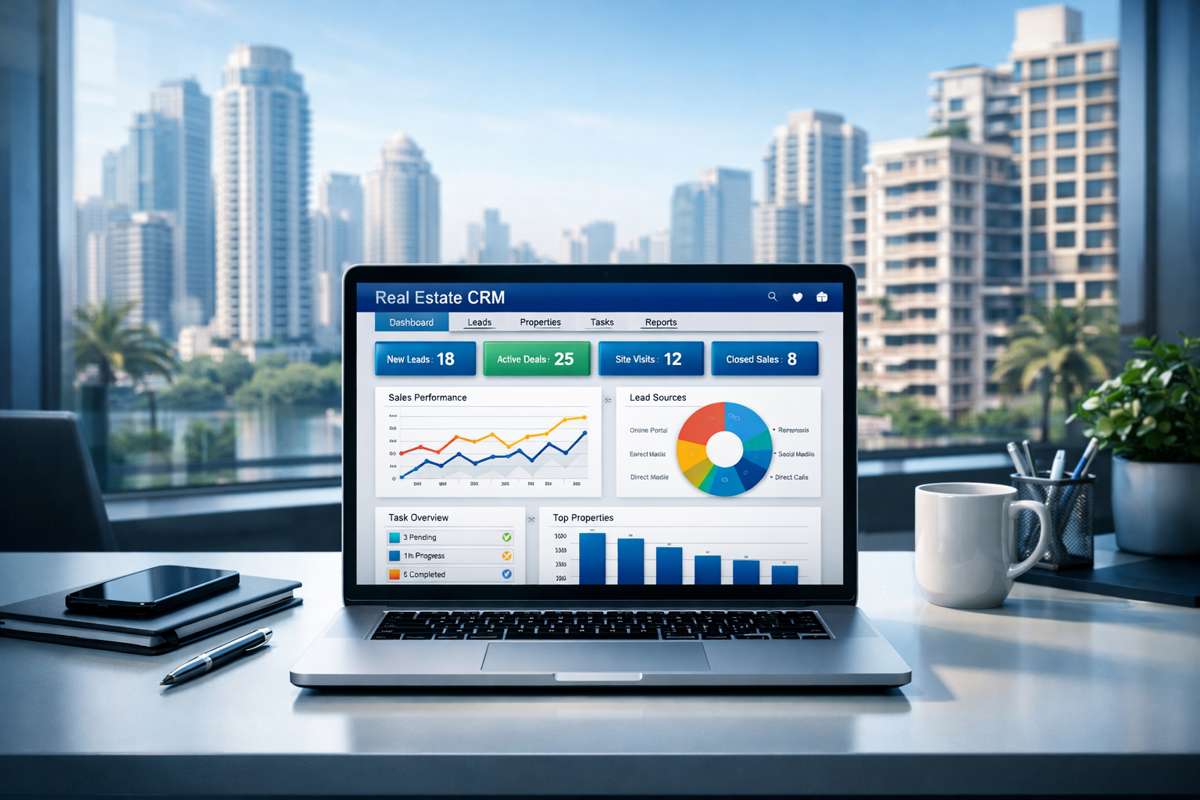
Property buyers today research thoroughly and expect fast, professional responses. That expectation is why lead management and sales automation have become essential for Indian real estate firms, and why a CRM is now one of the first tools growing teams invest in.
But a CRM is only worth buying if it pays for itself. This guide explains where the returns come from, what a CRM really costs in India, and how to calculate your own payback before you commit.
Where the ROI Comes From in an Indian Property Business
The leads in the real estate market are acquired through inquiries on various platforms, which are the following:
- Property portals
- Google search campaigns
- Social media ads: Facebook and Instagram
- Website inquiry forms
- WhatsApp / SMS inquiries
- Walk-ins and referrals
Managing these leads manually through WhatsApp, email and spreadsheets quickly becomes difficult, leading to duplicate calls, missed follow-ups, slow responses and poor team coordination. Each of these costs bookings, which is where a CRM earns its return.
To make the process smooth, the real estate CRM centralizes the interactions, adds structure, automates communication, and keeps an account of the distribution of the work among the agents. This results in faster customer response time, a high rate of conversion, and an increase in ROI.
CRM Options Indian Property Firms Commonly Compare
Most Indian property firms shortlist a mix of real estate-specific and general-purpose CRMs. For a detailed side-by-side comparison, see our top 10 real estate CRMs in India.
Whichever you shortlist, judge it on the payback calculation below rather than the licence price alone.
What a CRM Costs in India
The licence fee is only part of what a CRM costs. When comparing options, add up:
- Per-user licences: most CRMs charge per user per month, often with annual discounts.
- Setup and data migration: importing leads, cleaning duplicates and configuring pipelines.
- Integrations: portal, ad-platform, telephony and WhatsApp Business API connections, some of which carry their own usage fees.
- Training: time for sales, pre-sales and management teams to learn the system.
- Add-ons: extra storage, advanced reporting or automation limits on lower plans.
Always check each vendor's current pricing page, as plans change frequently.
How to Calculate Your CRM Payback
A simple way to estimate ROI is to compare the extra margin from additional bookings with the monthly cost of the CRM.
Payback = (extra bookings per month × margin per booking) ÷ monthly CRM cost
For example (illustrative figures): a team receives 500 leads a month and converts 1% (5 bookings). If faster response and consistent follow-up lift conversion to 1.3%, that is 1.5 extra bookings a month. Even at a modest margin of ₹1,00,000 per booking, that is ₹1,50,000 of extra margin against a CRM cost of, say, ₹15,000 a month, a 10× return.
Plug in your own lead volume, conversion rate and margin to see where you break even.
Where the Returns Show Up
In practice, the return from a CRM shows up in four places:
- Growth in Lead Conversions: Active follow-ups lead to better closing ratios.
- Better Sales Productivity: Eliminates manual data entry, letting agents focus on closing.
- Improved Customer Experience: Personalized interactions based on full communication history.
- Data-driven Growth: Strategic decisions based on real-time performance analytics.
Where Tranquil CRM Fits
Tranquil CRM is real estate CRM software built for Indian property firms. Pricing is based on team size and requirements; see our pricing page. Developers can see how teams use it across projects on our CRM for real estate developers page.
Conclusion
With the real estate industry expanding in India, adopting a CRM is a critical factor for growth. Firms that measure payback before they buy, and track it after they go live, get the most value from their investment.