Best CRM Software for Real Estate in India:Features, Price & ROI
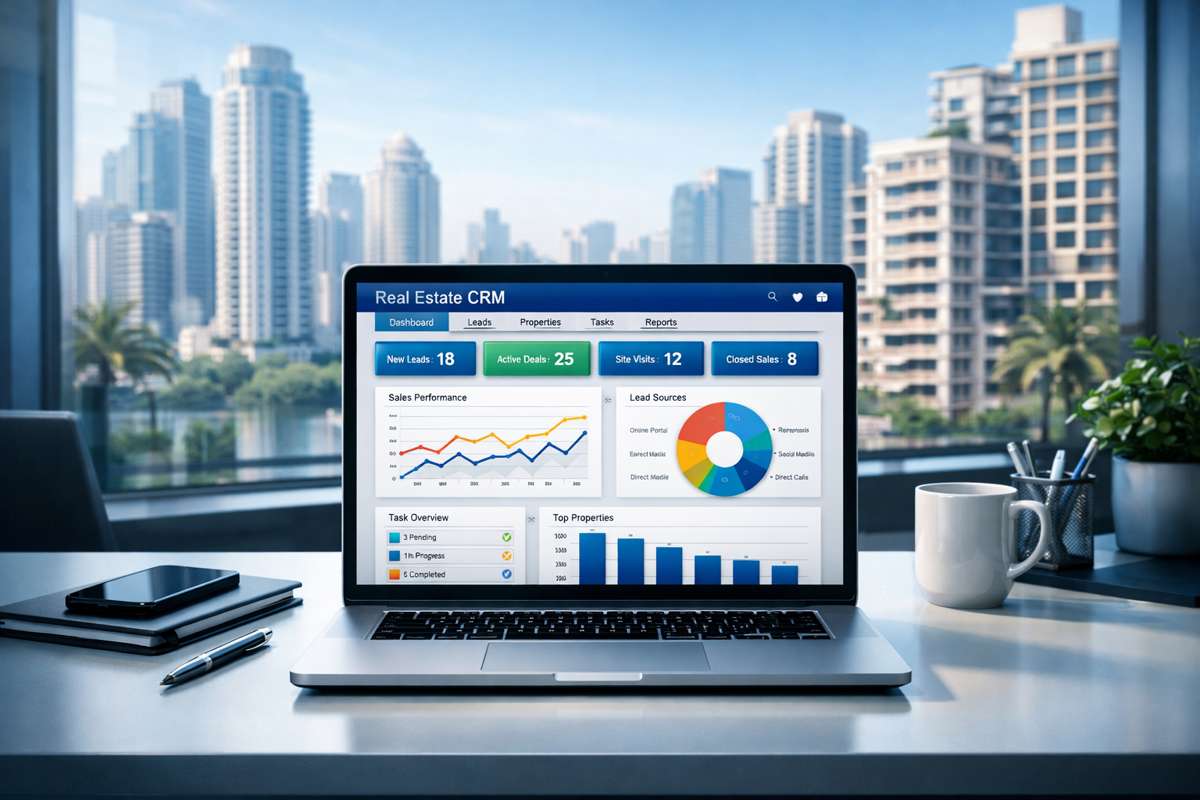
These days, buyers looking to purchase property conduct thorough research. With the expectations of the customers growing in the present day in the real estate market, it is mandatory for the agents and real estate companies to give timely and professional responses to the prospects. Therefore, it is the main reason why lead management and sales process automation have become necessary for real estate businesses. This is why the real estate CRM is an integral tool that real estate or property businesses must adapt to.
CRM, also known as Customer Relationship Management, is a tool that has made the lives of agents, brokers, and builders easy. Real estate CRM has replaced all the manual tasks with features like tracking the customer interactions, communication automation for faster replies, and management of property databases. Therefore, these features help in closing maximum real estate deals in less time.
Importance of Real Estate CRM Software in Indian Property Business
The leads in the real estate market are acquired through inquiries on various platforms, which are the following:
- Property portals
- Google search campaigns
- Social media ads: Facebook and Instagram
- Website inquiry forms
- WhatsApp / SMS inquiries
- Walk-ins and referrals
Managing these leads manually through WhatsApp messages, emails, and spreadsheets becomes really difficult. Leading to missed communication through instances like duplicate calls, missed follow-ups, delayed response time, and poor team coordination.
To make the process smooth, the real estate CRM centralizes the interactions, adds structure, automates communication, and keeps an account of the distribution of the work among the agents. This results in faster customer response time, a high rate of conversion, and an increase in ROI.
What Makes a CRM Real Estate Business Ready?
Not all CRMs are the same! Every CRM is developed based on the industry. General CRMs lack the industry-specific requirements confined to property workflows. Here are some features that a true real estate CRM offers:
1. Multi-source Lead Capture
A real estate CRM captures the leads automatically from property portals, WhatsApp, website forms, and social media ads. This ensures easy contact and fast replies, preventing the leads from going cold.
2. Sales Pipeline Deal Tracking
This helps the team understand and track where the lead stands in the sales journey—from new inquiry and site visits to negotiation and final booking.
3. Smart Lead Assignment
The CRM assigns leads smartly using project-based or specialist-based allocation, ensuring an efficient distribution of work and a healthy team environment.
4. Automated Follow-ups
Ensures consistent engagement with prospects via scheduled SMS, WhatsApp threads, and email reminders so no lead goes cold.
5. Property Inventory Management
Acts as a centralized access point for information about property pricing, availability, and configurations.
Best CRM Software for Real Estate in India (2026)
1. Tranquil CRM
One of the fastest-growing platforms, specifically designed for the Indian market. It provides a fully integrated system to manage property sales from inquiry to post-sales. Key features include inventory management, commission tracking, and a dedicated mobile CRM for agents. It is perfect for developers needing complete ERP solutions.
2. ZOHO CRM
Known for customization and workflow automation, it is suitable for small to medium-sized agencies looking for scalable multi-channel communication tools.
3. Property CRM
Focuses heavily on WhatsApp automation and property portal integration. Ideal for agencies that rely primarily on WhatsApp for client communication.
4. HubSpot CRM
Famous for its user-friendly interface and free basic version, making it a viable option for individual agents or small teams transitioning from spreadsheets.
5. Freshsales CRM
Employs AI-powered lead scoring and automated workflows to simplify the sales cycle, working well for teams requiring smart, data-driven insights.
Indian CRM Pricing Comparison
- Tranquil CRM: Custom pricing based on team size and requirements; structured for clarity and large-scale project management.
- ZOHO CRM: Ranges between Rs. 800 and 3,200 per month per user.
- HubSpot CRM: Offers a free basic plan; paid tiers vary as business grows.
- Freshsales CRM: Starting from approximately Rs. 749 monthly.
- 91Leads CRM: An affordable entry-level option starting at Rs. 199 monthly.
ROI of Using Real Estate CRM
Integration of a real estate CRM delivers a significant Return On Investment through:
- Growth in Lead Conversions: Active follow-ups lead to better closing ratios.
- Better Sales Productivity: Eliminates manual data entry, letting agents focus on closing.
- Improved Customer Experience: Personalized interactions based on full communication history.
- Data-driven Growth: Strategic decisions based on real-time performance analytics.
Conclusion
With the real estate industry expanding in India, adapting a CRM is a critical factor for growth. Handling business manually is unconventional and outdated. In this evolving world, upgrading to technology turns out to be the key to success.