How Real Estate CRM Software Improves Lead Management and Sales Automation
Introduction
The business of real estate depends on maintaining good relationships, punctuality, and building trust. In today's futuristic world of evolution and digitalization, the pillars of good relationships, punctuality, and trust depend on proper organization.
The clients seeking to buy property have now started inquiring on multiple platforms these days. They prefer comparing projects listed online and expect fast responses. The client's decisions these days depend on how professionally a real estate company is dealing with them and handling their inquiries. However, for real estate brokers, agencies, and developers, managing the clients' inquiries manually has become highly impossible.
The Challenges of the Modern Real Estate Industry
Let's understand the challenges that the modern real estate industry faces before moving towards the solution. The competition in the Indian real estate market is escalating rapidly. To tackle numerous inquiries at once, it's important to be digitally versatile and equipped.
The major inquiries come from:
- Property portals
- Google search campaigns
- Social media ads
- Website landing pages
- Direct calls
- WhatsApp messages
- Referrals
- Word of mouth
- Walk-ins
Therefore, when these leads are handled in the same old way, like spreadsheets, notebooks, or mail or chat threads, it becomes disorganized. The issues mentioned below arise:
- Missing on Leads
- Delayed follow-ups
- Forgetting Reminders
- Hot prospects going cold
- No performance tracker
- Spam calling
Missing even a single follow-up leads to losing out on deals worth lakhs or crores. Hence, real estate CRM software helps in bridging these gaps.
What is Real Estate CRM?
The full form of CRM is Customer Relationship Management. A real estate CRM is software that precisely helps real estate professionals in terms of managing inquiries, tracking prospects, monitoring deals, and also automating sales activities.
Real estate CRM software comprises features that are specifically curated for real estate businesses, such as:
- Property listing management
- Scheduling site visits
- Tracking commission
- Tracking lead source
- Monitoring the performance of the agent
- Visualizing sales pipeline
Put simply, it becomes a main control unit for the entire business operation. The real estate CRM truly makes a difference, as seen in managing the leads efficiently and streamlining the sales process.
How Does Real Estate CRM Improve Lead Management?
Dealing with a lead is impossible without any structure in an organization. Marketing campaigns fail if the business is not organized. Lead management plays a crucial role; that's where the real estate CRM comes into the picture.
1. Centralized Collection of Leads
Imagine manually copying data from emails, portals, and other platforms—how tiring and unorganized it is. Real estate CRM integrates multiple sources like emails, property listing portals, WhatsApp threads, and SMS. This automatically acquires all the inquiries in one centralized system.
As soon as a lead fills out a website form or sends an inquiry over WhatsApp, it is recorded in the CRM dashboard. This ensures no inquiry is missed, avoids manual data entry errors, and ensures complete visibility.
2. Quick Response Time
According to research, a response within the first few minutes of the inquiry has a high chance of conversion. Real estate CRM instantly sends notifications through SMS alerts, email, and mobile app push alerts. This helps in contacting the lead immediately to make a strong first impression.
3. Intelligent Lead Assignment
Real CRM software automates lead allocation through: Round-robin assignment, Project-based routing, Agent specialization mapping, or Location-based distribution. For instance, luxury property leads can be directed to senior agents, increasing accountability.
4. Lead Prioritization and Segmentation
CRM software classifies prospects based on budget, property type, location, and purchase timeline. Leads can be classified as:
- New / Contacted
- Interested / Hot
- Site visit schedules
- Negotiation / Closed / Lost
5. Complete Interaction Tracking
Real estate CRM maintains a timeline of calls made, messages sent, emails shared, documents exchanged, and site visit history. If an agent is unavailable, another team member can easily continue the conversation with full context.
6. Reduction of Lead Leakage
Lead leakage occurs due to unorganized tracking. The real estate CRM records every lead, monitors every stage of the conversation, and schedules follow-ups to ensure no opportunity is lost to competitors.
How Real Estate CRM Enhances Sales Automation?
Automation reduces repetitive manual work and ensures communication is timely. Here is how it strengthens the process:
1. Automated Follow-Up Reminders
The CRM automatically schedules SMS follow-ups, WhatsApp messages, and call reminders. For example, it can alert an agent 48 hours prior to a site visit or schedule a follow-up three days after a price discussion.
2. Drip Marketing Campaigns
Since buyers take time to think, the CRM stays connected through drip campaigns (Project updates, Limited-time offers, Festive promotions). This keeps the client's attention on your project until they are ready to invest.
3. Sales Pipelines Automation
The dashboard displays opportunities in stages like Enquiry, Site Visit, and Booking. Moving a deal triggers internal tasks, documentation reminders, and payment follow-ups automatically.
4. Automated Task Generation
The CRM can generate tasks like a feedback call after a site visit, sending a payment structure after negotiations, or uploading KYC documents after booking, reducing the risk of missing operational details.
5. Analyzing Performance in Real Time
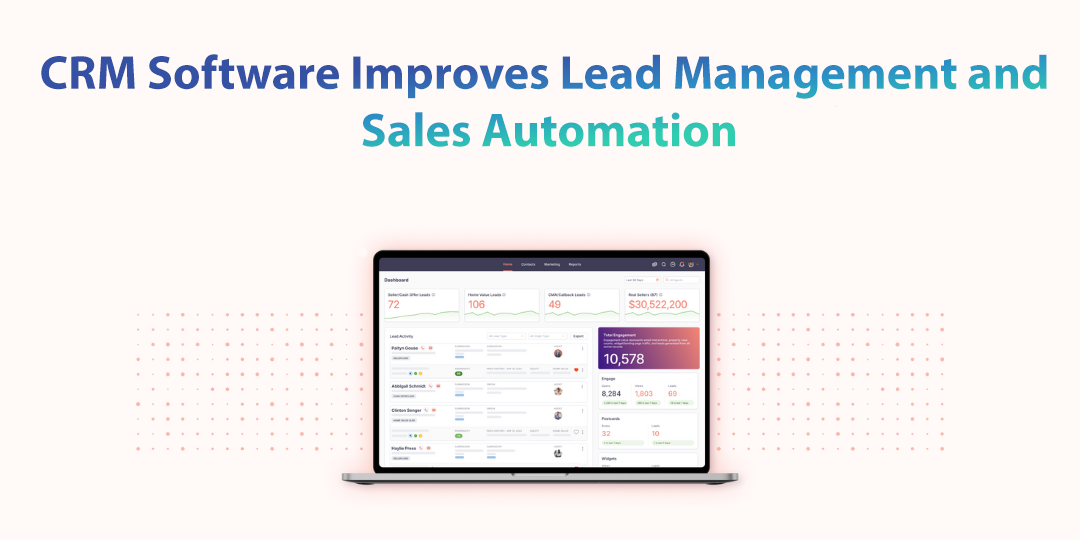
Dashboards provide real-time data on lead source performance, conversion rates, agent productivity, revenue projections, and marketing ROI.
Business Impact and Benefits
Many real estate businesses have observed a 20 to 30 percent rise in closing ratios and a 30 to 40 percent improvement in lead response time after implementation.
Benefits for Stakeholders:
- Individual Brokers: Organized contact management and professional communication.
- Agencies: Transparency, clear reporting, and reduction of duplication.
- Developers/Builders: Project-based lead tracking and sales forecasting.
Cost Efficiency, ROI, and Scalability
A missed deal can cost lakhs. Investing in CRM improves marketing ROI, saves time through automation, and increases productivity per agent. The ROI is typically visible within a few months.
As you grow, the system handles larger lead volumes, manages multiple projects, and tracks multiple marketing portals simultaneously without the chaos of manual systems.
Conclusion
The business of real estate depends on strong bonds and rapport with the prospects. Strong systems and a structured approach help in building these relationships. Real estate CRM provides the business structure, speed, and scalability that satisfies leads, making your business grow and build trust.